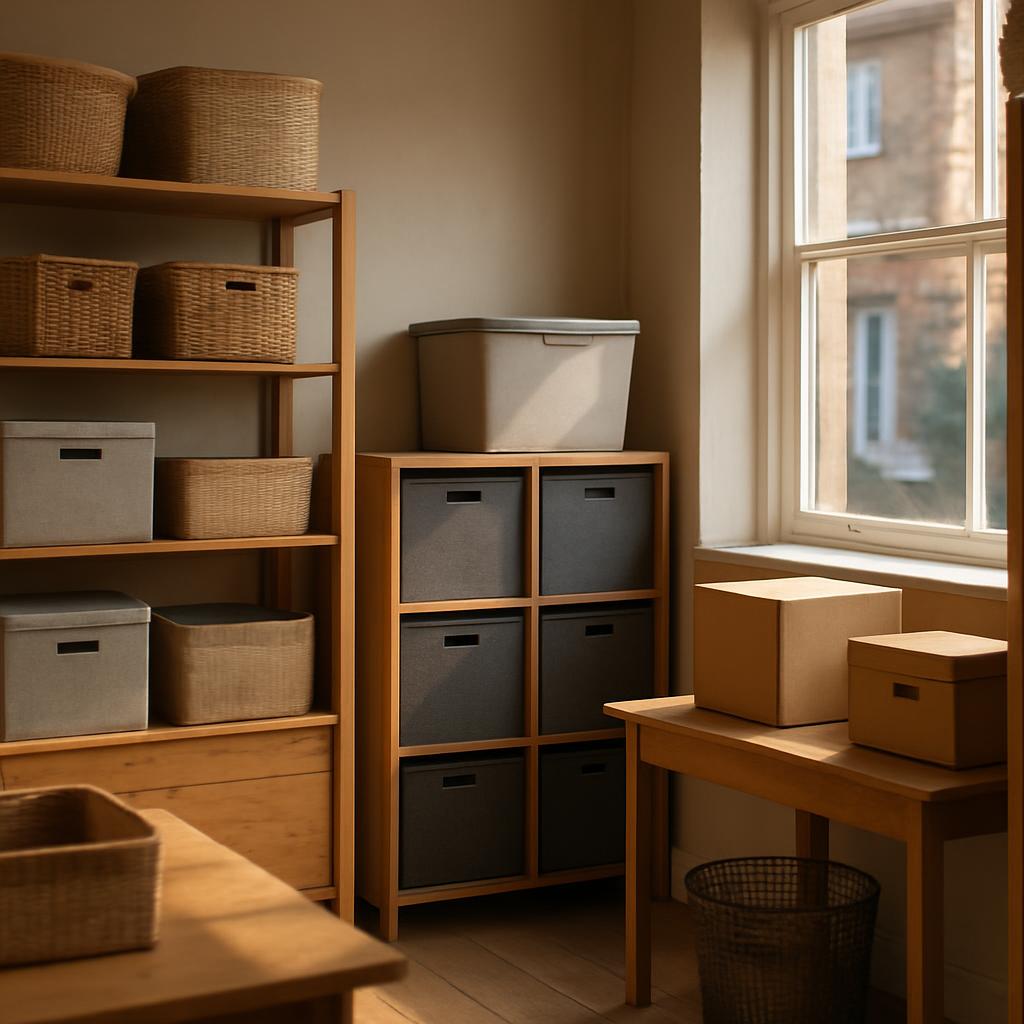
Fellgate Businesses Know Storage Tricks Homeowners Miss
Find Out More →Walk into any busy shop or workshop in Fellgate and you'll notice something. The owners aren't stuffing boxes haphazardly into storage units—they've got a system. A real one. Meanwhile, a lot of homeowners I know rent a unit, throw things in, and hope they'll remember what's where come next year. The difference isn't luck. It's how businesses approach the problem differently.
The good news? You don't need to run a shop to use their playbook. The storage habits that keep Fellgate businesses organised—and able to access what they need without digging through everything—work just as well for a spare bedroom's overflow, seasonal gear, or a house clearout.
Why businesses treat storage like inventory, not a dumping ground
Businesses use self storage because they need to get things in and out regularly. A closed shop in town can't afford to waste an hour hunting for stock. So they label everything properly, map out their unit, and keep a real list—digital or paper—of what's where.
Most homeowners don't think that way. They rent a unit for 'stuff I might need someday', pile it up, and six months later can't find anything without moving half the unit. It's not laziness—it's just that homes don't operate under the same pressure as a business does.
But here's the thing: the moment you apply business-level organisation to your own storage, everything changes. Label your boxes with actual contents, not 'miscellaneous'. Take a photo of one side of each box. Write it down. Find out more about how this system works in practice. When you finally need something, you walk straight to it instead of unpacking five boxes to find one item. You also realise what you can actually throw away—because you can see what you're paying to store.
The 'rotation' approach businesses rely on
Seasonal stock moves in and out of storage units constantly in retail and trade work. A business isn't paying to keep winter stock sitting all year round—it comes in October, moves out in March, and the space gets used for something else. That rhythm keeps costs down and forces regular reviews of what's actually needed.
Homeowners often treat a unit like a tomb for things they're not quite ready to part with. Boxes go in and don't move for years. You forget what's there, forget why you're keeping it, and the fees stack up.
Shift your mindset a bit: treat your unit more like a temporary holding point than a permanent graveyard. Set a mental deadline. If something stays untouched for a year, ask yourself honestly if you need it. As we covered in this guide, businesses use this principle to stay lean—and it works for homes too. You end up storing less, paying less, and having clearer spaces to live in.
How businesses plan their unit layout before they start
A business doesn't just open a unit and wing it. They think about what goes where before moving anything in. Heavy items at the back or bottom. Things they access regularly near the front. Vertical space used properly. Aisles left clear so nothing gets trapped behind something else.
This planning saves time and prevents damage. It also stops you from overstuffing. When you've actually planned the space, you realise how much you can fit—and how much won't fit—before you start.
Most household moves to storage happen in a rush. You're clearing a room, your nan's left you her furniture, or you're between homes. There's no time to plan. Boxes get stacked however they fit, and by month three you can't access half of what you paid for.
Take an hour beforehand. Measure your unit. Sketch it out. Decide what goes where. This article explains the specific techniques that make this work. It sounds fussy, but it genuinely saves money and frustration.
The real difference: treating storage as a tool, not a band-aid
Businesses rent storage units because they solve a specific, temporary problem—seasonal stock, renovation work, overflow during busy seasons. They know when the unit will be needed and roughly when it won't. It's purposeful.
Homeowners often rent storage because they're not ready to make decisions. Boxes of 'might be useful someday' stuff, clothes you might fit into again, furniture your taste might shift back to eventually. The unit becomes a place to park indecision, not a solution to a real problem.
The businesses in Fellgate—whether it's a trader storing tools and equipment or a retailer managing seasonal stock—understand that storage is an expense to minimise, not a space to fill. They use it when needed, clear it out when it's not, and keep costs down.
You can do the same at home. Be honest about what deserves storage space and what doesn't. A flood-prone area like Fellgate means thinking about climate control too—damp is a real risk here with our proximity to the Tyne, so good ventilation matters. If something's sentimental, keep it in your home where you'll actually see it. If it's practical but seasonal—winter coats, Christmas decorations, camping gear—storage makes sense. If it's stuff you're genuinely unsure about, it probably doesn't deserve the monthly fee.
Getting started the right way
You don't need to overhaul everything at once. Start with one principle: label and list. Next time you add something to storage, take five extra minutes to write it down. The next time you need something and have to hunt for it, you'll understand why businesses do this.
If you're thinking about renting a unit in Fellgate or already have one that's not working well, Self Storage Fellgate can help you find the right fit and size. A quick conversation can make the difference between a unit that costs you money and stress, and one that actually solves a problem.
Looking for Self Storage near Fellgate?
We have secure, flexible units available in the area. Get in touch with Self Storage Fellgate today.
Find Out More →